
The three trillion dollar stimulus of the last year -- see my COVID-19 page for details -- carpet-bombed the economy during the spring lockdown. But now what?
The hard part of national economics is what to do after the war or the stock-market crash or the epidemic, and past history is not very encouraging.
Back in the days of the gold standard, governments would implement policy of "resumption," to cancel the inflation of the war years and return the value of the national currency to its pre-war level. The idea was to pay back holders of government debt for their losses during the war inflation. The results were not happy.
After the Napoleonic War the Brits were determined to get back to pre-war parity. The result was deflation and unhappy workers, like the Peterloo Massacre of 1819 and the Captain Swing riots of 1830. Of course it all ended happily ever after with the Great Reform Bill of 1832.
After the US Civil War which featured a ton of paper money and debt, the government determined to return to the pre-war parity of the dollar. This led to the Great Panic of 1873. Farmers that took out mortgages in the 1860s were screwed because their farm mortgages were underwater -- also debtors in general. What followed was the Long Depression. And then there was the Panic of 1893 with a depression that lasted until 1896. Remember William Jennings Bryan and the "Cross of Gold" speech, as in "You shall not crucify mankind upon a cross of gold." He means the gold standard.
After World War I countries like Britain and the US went back on the gold standard at pre-war parities. And the workers and debtors hated it. Of course, Germany, dismembered by the Treaty of Versailles, was unable to service its war debts and keep paying all its social democratic benefit programs and so devalued the currency in hyper-inflation and wiped out the widows and orphans in the middle class that kept their savings in Reichmarks. Thanks, pal, said Adolf Hitler.
After the 1929 stock market crash the US Federal Reserve Board fluffed its first financial crisis by failing to act as lender of last resort. With the help of the New Dealers this gave the US a ten-year Great Depression that only ended when the US started spending (and releasing business from regulation) in the run-up to World War II.
After World War II there was not a depression. But the dollar was kept at its pre-war value. The US government ran surpluses for a couple years, but managed to get the federal debt down from over 100 percent GDP down to 35 percent of GDP. I still don't know how they did it.
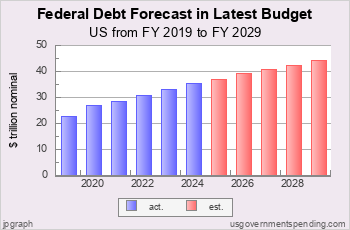
Then we had the Crash of 2008, when Little Ben Bernanke, Chairman of the Federal Reserve Board, failed to act as lender of last resort when Lehman Brothers went south. Ben, oh Ben! Then with Barack Obama as president the federal government decided it was more important to do gubmint health care than to get the economy back on track. Thanks, Barack!
So here we are about to emerge from the tragedy of the COVID-19 pandemic, and the question is: how well will the federal government handle it, threading the needle between getting the economy back on track, avoiding inflation, and doing or not doing the massive agenda of the climate change religion?
How should the federal government thread the needle? Honestly, I don't have a clue. Except that I know that one thing to do is to put off the elimination of fossil fuels for now, and avoid new subsidies for "renewable energy." And I have a feeling that a President Trump, who knows a thing or two about debt, would do a better job than Joe Biden who, I suspect, literally knows nothing except how to play the game of politics, and will outsource economic policy to conventional-wisdom swamp creatures.
One thing from the post WWI German hyper-inflation. Stocks and gold did all right. Bitcoin? Wasn't invented yet.

No comments:
Post a Comment